I am thrilled to have the opportunity to present TWO webinars over the next few months with Therapy Network Seminars! The first, “Introduction to Pelvic Floor Rehabilitation” will be next Thursday, 11/5 8:00 – 9:30 p.m. EST and will provide introductory information about pelvic floor anatomy and function, common diagnoses related to pelvic floor dysfunction, basic information on what pelvic PT really involves, how to screen for pelvic floor dysfunction in YOUR patients, AND most importantly, how you can begin to integrate the pelvic floor into treatment the very next day!
Then, on 12/10 8:00 – 9:30 p.m. EST, I will be presenting on “Pelvic Floor Dysfunction in the Adult Athlete.” This webinar will dive deeper into the role of the pelvic floor in stability and will explore the relationship between the pelvic floor and the other deep stabilizers around the pelvis. We will also discuss how to integrate the pelvic floor and the diaphragm within functional core stabilization, common diagnoses related to pelvic floor dysfunction in the adult athlete, and specific key components to be addressed for women returning to athletics postpartum.
I am super excited to be presenting these webinars, and I hope some of you will join me!!
Register today for the early bird discounted rate of $31!!
I’ll admit it… I like treating pooping problems. I know that grosses some people out, but it’s true. I think it’s because bowel problems really really impact people’s lives. I mean, pooping is a super basic human activity–so when it’s not working the way it should, it’s really awful.
I have recently had quite a few patients who are having difficulty evacuating their bowels. Now, there are multiple reasons why this could occur (I know, I’ve written about constipation a lot already, see here for evidence)–but today, we’re going to chat about one in particular, dyssynergic defecation or sphinctor dyssynergia.
What exactly is dyssynergic defecation?
Basically, your pelvic floor muscles work with your colon reflexively. When your colon is contracting to push the poop out, and you are sitting on the toilet ready to empty your bowels, the muscles should relax and open to allow this to occur. Sometimes, this relationship becomes dysfunctional, and basically, you think you are pushing and relaxing the sphinctor muscles, but instead, the muscles are contracting and closing the sphinctor. I know what you’re thinking– Jessica, I would know if I were actually contracting my muscles instead of relaxing them while I poop. But, no, you wouldn’t. In fact, many patients are shocked when I show them the actual coordination of their muscles.
Typically, incoordination of the pelvic floor muscles is paired with poor coordination of the abdominal muscles, and often impaired sensation of the rectum. Dyssynergic Defecation is diagnosed typically by an anorectal examination, and anorectal manometry/defecography testing (like this, with an MRI, or by assessing muscle activity with EMG while the person attempts to expel a balloon, or other testing options)
Why does it happen?
Dyssynergic defecation is very common in people who have constipation. In fact, this review suggested that close to 40% of people with constipation have this incoordination pattern. There are several factors that can contribute to dyssynergic defecation. This review estimated that close to 30% of adults with dyssynergic defecation patterns had constipation as children, and found that 46% had frequent straining to empty hard stool. But there are other factors that can contribute as well, such as:
pregnancy
traumatic injury
low back pain
history of sexual abuse/trauma
poor behavioral habits related to bowel health
nothing (like many other things, we sometimes just don’t know why it happens)
What are the signs and symptoms?
As we discussed previously, dyssynergic defecation is extremely common amongst those struggling with constipation (typically meaning < 3 BMs per week, as well as symptoms of abdominal discomfort, bloating, and/or difficulty emptying bowels). This article looked at the most common reported symptoms of those with dyssynergic defecation, and found that many experienced the following:
Excessive straining to have a bowel movement
Feeling of incomplete evacuation after a bowel movement
Abdominal bloating
Frequent hard stools
Frequently utilizing digital maneuvers to empty stool (this means, using a finger to either help pull stool out of the rectum, or using a finger to press inside the vagina to help empty)
What can you do about it?
The great news is that men and women (and kids too!!) with a dyssynergic defecation pattern can respond very well to conservative treatment! Pelvic physical therapists are typically the providers of choice when it comes to helping people with these problems, and work closely with GI and Colorectal Physicians to help these men and women. Treatment typically involves a few different components:
1. Developing amazing bowel habits. You know that has to be first on my list. If your bowel habits are not stellar, we can try to help your muscles all we want, but you will still have difficulties emptying. So, first things first, we need to make sure your dietary habits rock, you have a great bowel routine, and you know how to sit on the toilet in the most optimal way. Wondering what that toilet position is? Check out this sort of funny, mostly weird video by my favorite potty comedians and stool developers (pun intended), Squatty Potty.
2. Surface EMG Biofeedback training to improve muscle coordination: Biofeedback training uses surface electrodes placed at the anal sphinctor muscles and the abdominal muscles to identify the type of pattern a person uses to expel a bowel movement. Once we identify the pattern you currently use, we can work together to improve the pattern so that your sphinctor muscles relax when you generate abdominal pressure to empty your bowels. Seems pretty basic, right? But the right biofeedback training can make a HUGE difference–and the current research really supports this treatment for anyone with this problem. (See this article, this one, that one, and this one!)
3. Making sure your pelvic floor muscles are strong, FLEXIBLE, and well-coordinated. So, we’ve talked in detail about the pelvic floor muscles on this blog. Remember, we all want muscles that can contract AND relax. And, for dyssynergic defecation patterns, the relaxation component is extremely important! Often times, people who have difficulty relaxing their muscles to have a bowel movement tend to have tender, overactive pelvic floor muscles to begin with. So, treatment will also focus on improving awareness of the pelvic floor muscles, learning to relax the muscles (dropping and lengthening them), and often will include some manual therapy (yes, internal vaginal or rectal) to help reduce the tenderness and improve the mobility of the muscles.
4. Balloon retraining. People love hearing about this one… but it really is an awesome and effective treatment for so many men and women!! (Research supports it also– see here and here!) This treatment basically uses a small balloon that is attached to a catheter and is inserted into the rectum, and slowly inflated. Often times, people with dyssynergic defecation patterns have decreased sensitivity in the rectum, so they will not feel the presence of stool (or a balloon!) in the rectum when they typically should. Based on what we find initially, we can use the balloon to improve the sensation in the rectum. We can also use a slightly filled balloon to work on proper expelling techniques. I know what you’re thinking, Wow Jessica, this sounds like a super fun and awesome treatment. I know, but honestly, it’s very very helpful for people who need it!
Now, this just scratches the surface in terms of what all we pelvic PTs do to help with dyssynergic defecation. But, I wanted to get the conversation started! This tends to be a topic many people don’t talk about… in fact, I have had men and women travel SO far just to get the initial diagnosis! And, I need that to stop… hence this blog post today. Lastly, if you are having problems with constipation and think you may have this problem– Go see a GI/Colorectal Physician! Honestly, make an appointment today! And, contact your local pelvic PT. If you live in Atlanta or the surrounding area, give me a call! It’s time to get your bowels back in order (or even in order for the first time!).
I always look forward to hearing from you! So please, ask any questions or make any comments below!!
A few years ago, I participated in a Women’s Health Fair with my pelvic health team from Greenville, SC:
fuzzy–but a rocking team none-the-less! Proaxis still has a rockin’ WH team, so if you need help and live in Greenville, SC, check them out!
If you notice in the photo, we had a “Test Your Women’s Health IQ” game at our booth. The premise: 10 True/False questions… with an awesome prize if you get them all right. So, we had a group of about 4 or 5 guys (mid 20s-30s, all working for some tech company, I believe) come up to our booth, and confidently ask to take our test. The test was going pretty smoothly, and they were actually doing surprisingly well….until we reached this question:
True or False. It is normal for women to have discomfort/pain during sexual intercourse.
The guys chatted among themselves briefly, then confidently said, “Yeah, that one’s true… not always, but sometimes, yeah.”
Seriously guys?? In that moment, I felt a mixture of annoyance that there really are so many people out there who believe that women should have pain during sex, and also a whole lot of compassion for the poor women who may or may not have these guys as sexual partners.
Unfortunately, I hear this misconception frequently. Pain during sexual activity is fairly common (up to 1 in 5 women have pain during sex!), and somehow, women became convinced that this is “normal” and they just have to “deal with it.” But, I’m hear today to tell you that is not true!! There really are so many things that can cause pain or discomfort during sexual activity, and there are so many things that you can start today to help!
First things first, if you or your partner is having discomfort or pain during sexual activity, it is very important to be medically evaluated. Pain can be caused from urinary tract or vaginal infections, STDs, ovarian cysts, low estrogen, endometriosis, vulvodynia/vestibulitis, overactive, tender pelvic floor muscles**, abdominal scar immobility (yes, that c-section can play a role!)…and many other things! So, your first step is to call your medical doctor and get evaluated. I know that for some people, talking with a health care provider (HCP) about sexual problems can be very uncomfortable–but just remember, we’re professionals. We hear these things every day, and guess what? It’s very very unlikely that you will surprise or shock us by what you say. So, try to get past the embarrassment you may feel, and talk with your HCP. I think you’ll be very very happy you did.
**See note at the bottom of this post
Once you have been evaluated , here are 5 tips to help to improve pain during sexual intercourse!
1.Communication is Key. Yes, between you and your health care provider–but more importantly, between you and your sexual partner. I often treat men and women who will tell me that their partners have no idea that they are having discomfort during sex. It’s easy for people to see sexual pain as a “me” problem–but if you are having pain with sexual activity with a partner–it really is an “us” problem. Approaching the problem together can be so so helpful! It tends to be much less isolating, and often, people will find that they can have more enjoyable sex with better intimacy in the process.
2.Lubrication. Lubrication. Lubrication. There is absolutely no shame in using lubricant during sex. In fact, I recommend it for everyone! Using a quality lubricant can reduce pain significantly! Typically, I recommend a water-based lubricant like Slippery Stuff or Sliquid–but I have had good success with my clients using Coconut Oil or even Olive Oil (be careful if using condoms though or if you are prone to infection). Several gynecologists I know especially recommend a natural oil for women who have vulvodynia or vestibulitis/vestibulodynia.
3.If At First You Don’t Succeed…Try A Different Position. Seems pretty basic, right? But many couples will get in habits of using the same positions, and sometimes, position alone can make all the difference in the world. A different position changes how anatomy interacts, so depending on why you are having pain, a new position may be much more comfortable. If you’re having pain while on top, try switching to the bottom or on your side. And, pillows are your friend. Use them to support your legs or back to help you be more comfortable.
4.Foreplay. Pain can really impact the mood. Many times, couples who are struggling with pain during sex will find that sexual desire and arousal become significantly impacted. Setting the mood, and making time for romance and foreplay can help to improve arousal. Arousal is really so important as there will be more natural lubrication and overall body relaxation which should help to improve the experience.
5.Don’t be afraid to ask for help! These little tips are meant to be helpful suggestions–but they won’t necessarily be a fix for many people who are having pain! If you or someone you know are struggling with pain during sexual activity, it really is important to get some help! Pain during sexual intercourse should not be something you have to “just deal with.” I don’t care if you’ve 1) had a baby 2)have a partner who happens to be larger 3) have some dryness as you’ve gotten older 4) have any other excuse for why YOU having pain is normal. Pain is NOT normal. Take the first step–do something about it today!
There are so many wonderful resources out there for people who are experiencing pain during sexual intercourse! Here are a few books I recommend:
Sex Without Pain, by Heather Jeffcoat, PT
Excellent resource by Heather–who happens to be a Duke alum! This book is a self-treatment guide for those experiencing pain with sexual activity.
To Bed Or Not To Bed, by Steve and Vera Bodansky
This book is one I often recommend for those struggling to experience pleasure with sexual activity. Although explicit (**warning), this book does provide step-by-step recommendations to make sex more pleasurable– and also covers other information on romance, foreplay, etc.
Reviving Your Sex Life After Childirthby Kathe Wallace, PT,
This book recently came out about a year ago, and is based on tons of wonderful research by my friend and colleague Kathe Wallace. Kathe has taught pelvic floor education for professionals for years, and this book is awesome!
As this is my first post dedicated to sexual dysfunction, this post is just scratching the surface of a HUGE topic! What else should we learn about? Let me know in the comments below!
**Yes, tender pelvic floor muscles can significantly contribute to pain or discomfort during sexual activity. Remember, the pelvic floor muscles stretch to allow for penetration and contract to provide pleasure. If the muscles are tender, hypervigilant, or overactive, they can contribute to pain or discomfort. If you believe your muscles may be a factor in the pain you are experiencing, it is definitely worth your while to seek out evaluation and treatment by a physical therapist trained in treating pelvic floor muscle problems. Give me a call if you live in the Atlanta area, or feel free to shoot me a message if you need help finding someone near you!
I can’t help it. Every time I think scar, I think… Scar (and yes, I used to have a much better picture of Scar from The Lion King for you…but I had to remove it in my attempt to make sure I’m not violating anyone’s copyright laws!) I was going to try to think of some funny way to explain why scars and Scar are the same… but I can’t… I relate it to the 50,000 times I have watched The Lion King... so I’ll leave it at that.
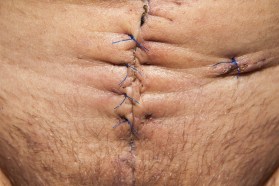
Scars can be a big pain though– literally! I have treated women who even after several years cannot tolerate pressure on a c-section scar. Men who have nice huge abdominal scars that ultimately contribute to problems with constipation. And moms who have discomfort near their perineal tears every time they have sexual intercourse. The truth is that scar tissue is often something skilled physical therapists will evaluate and treat as part of a comprehensive program in men and women with pelvic floor dysfunction(and really, with any type of problem!). And the best part– treating scar tissue can make HUGE differences!
So, what is a scar?
When there is an initial injury (and yes, a surgical incision is an “injury”), the body goes through three phases of healing: Inflamation, Proliferation and Remodeling. Through this process, the body creates scarring to close up the initial injury. Scars are composed of a fibrous protein (collagen) which is the same type of tissue that is in the tissue the body is repairing (i.e. skin, etc). The difference, however, is that scars are not quite organized the same way as the tissues they replace, and they don’t really do the job quite as well. (i.e. scars are much more permeable to UV rays than skin is). Scars can form in all tissues of the body– even the heart forms scar tissue after someone has a heart attack (myocardial infarction).
How do scars lead to problems?
After the inflammation and proliferation stage of healing, comes the remodeling. This stage can take months to years! During this time, the body is slowly adapting and changing the scar to the stresses on the tissue. Have you ever noticed that some scars initially are pink and raised and then over time become light/white and flat? That’s remodeling. Ultimately, there are a few major reasons why a person might develop pain from a scar:
Adhesions: Scars are not super selective when it comes to tissues they adhere to. So, sometimes, scars will adhere to lots of tissues around them and this pull can lead to discomfort.
Sensitivity: Scars can become very sensitive for a variety of reasons. Sometimes, small nerves can be pulled on by the scar which can lead to irritation. Other times, people themselves will have a significant amount of fear related to the scar. This fear, can often make people avoid touching the scar, and that, along with what we know about how our brain processes fear and pain (See this post, this one, and this one), can lead to a brain that is veeerrrryyy sensitive to the scar. Along with this, muscles near scars can become tender and sensitive. This can occur due to the scar pulling on the muscle or due to the sensitive nerves in the area.
Weakness/Poor Muscle firing: So, we know that when our tissues are cut, the muscles around the tissues are inhibited (have you ever seen someone after a knee replacement? It can be quite a bit of work to get those muscles to fire immediately after surgery). That’s why it’s important to get the right muscles firing and moving once a person is safely healed. Moving the right muscles improves blood flow too which promotes healing.
Changing Movement: Painful scarring can lead to altered movement. We can especially see this with postural changes after c-sections or other abdominal surgeries, but movement patterns can change with scars all around the body. We also know that abnormal movement patterns over time can lead to dysfunction and pain.
What can we do about it?
There are several ways physical therapists can help decrease pain from scars. Can we actually break-up/melt/eliminate scar tissue? I don’t really think so– honestly, scars are made from strong material and truly breaking up the scar is typically something that has to be done surgically– but most of the time, that is not necessary. We can decrease pain from scars by:
Improving the mobility of the scar: Gentle techniques to massage the scar and the tissues around the scar can facilitate blood flow to the area and decrease some of the pulling on the tissues around it. There is a thought as well that scar tissue massage can disrupt the fibrotic tissue and improve pliability of the scar (basically, help the scar organize itself a little better, and ultimately move better), and help to promote decreased adhesions of the scar to the tissues around it. Unfortunately, there really is not a lot of great research out there about scar tissue massage. However, this review published in 2012 found that 90% of people with post-surgical scars who were treated by scar massage saw an improvement in either the appearance of the scar or their overall function–which is very promising!
Desensitizing the scar and the nervous system: This is where I think we can make huge changes–both by improving someone’s worries/fears about the scar (calming the nervous system) and by slowly desensitizing the scar and the skin around the scar to touch. This is a slow process, but over time, many people who initially can barely tolerate pressure on the scar can be able to easily touch and move the scar without discomfort.
Promoting movement: So, we talked about how muscles can become inhibited or tender after a surgery? Part of improving scar tissue related pain is helping the muscles around the scar move well and learn to fire again. This can include some soft tissue treatment to the muscles to reduce the tenderness of the muscles, but ultimately leads to learning to use the muscles again in a variety of movement patterns. Movement is amazing for the body and can not only improve blood flow, but decrease pain too!
Wanna learn more?
Several of my colleagues have written wonderful information about scar tissue! Check out this great, article and free handout by Kathe Wallace, PT on abdominal scar massage! My colleagues at the Pelvic Health and Rehabilitation Center have also written a few blogs on scars, which you can find here and here.
I’m sort of nerdy (you already knew that though, didn’t you!)… so periodically, I like to go to my favorite medical search engines to find what is new in the literature regarding all things pelvic health. This helps me to keep aware of new treatments that are available, and helps me to constantly re-evaluate the treatments I provide for patients to make sure I am providing the best treatment I can!
Urinary urgency/frequency, urge incontinence, and overactive bladder problems are often not as frequently discussed in physical therapy circles as stress incontinence. Surprisingly, pelvic PTs actually treat these problems equally as often, if not more! A comprehensive PT program can be extremely effective for these types of problems! (So, if you are having urinary urgency, frequency or overactive bladder problems, and you live near Atlanta, give me a call! :))
So, what’s new in the research to help with overactive bladder problems and urge-related incontinence?
Myofascial release techniques can be very helpful for patients with urinary urgency and frequency.I was pretty excited to see this study come out in the Journal of Female Pelvic Medicine and Reconstructive Surgery. Pelvic PTs have noticed for quite a while that many men and women with urinary urgency and frequency actually tend to have hypervigilant overactive pelvic floor muscles rather than the traditional weak and stretched out muscles people like to think they have. Manual therapy, included within a comprehensive rehabilitation approach, can be very effective for helping this population, and I’m excited to see a recent study supporting the same thing!
Mindfulness-based stress reduction (MBSR) seems promising in helping to reduce symptoms of overactive bladder and urge incontinence. I didn’t find this surprising at all, but was again, excited to see this coming out in the literature. If you see in my first note above, many people with urinary urgency and frequency actually have a “hypervigilant” or “overactive” pelvic floor muscles. Stress reduction and mindfulness techniques help to calm the whole body–pelvic floor included! Along with this, we often find that people with urgency/frequency problems tend to live in a more sympathetic nervous system dominated state (basically, the “fight or flight” response is in overdrive!). Calming this system can be very helpful in calming the bladder.
Pelvic floor muscle training continues to be recommended as a first line treatment for stress, urge or mixed incontinence. It’s true, the most updated Cochrane Review published in 2014 continued to recommend pelvic floor muscle training to assist in improving all bladder symptoms. Their review showed close to a 55% cure rate–which is pretty good, considering this was just retraining the muscles in isolation. Imagine what could happen when the right retraining of the pelvic floor muscle is combined with behavioral retraining, dietary training and retraining the pelvic floor within the body as a whole? I bet the results would be much much better.
Percutaneous tibial nerve stimulation may help to reduce urinary frequency and urge-related incontinence. This started becoming popular a few years ago, and honestly, there needs to be more higher quality studies in order for us to really see how effective this treatment is or isn’t. But, that being said, some of the initial results seem promising. If you are not familiar with this technique, it utilizes a very thin needle which is placed near the ankle to stimulate the posterior tibial nerve with a low electrical current. The thought is that this nerve comes from the same level in the spinal cord that the nerves to the bladder originate, so stimulation could possibly help modulate an overactive bladder. (Similar concept to the Interstim treatment which stimulates at the sacral nerves, but less invasive) Looking forward to what the research shows on this treatment in the future!
Losing weight can help improve bladder symptoms. This is true for both urge related incontinence and stress incontinence (although, seems to help stress incontinence a bit more). In this particular study, 46% of the participants in the weight loss program achieved more than a 70% reduction in their incontinence symptoms. So, if you are overweight or obese, beginning a weight loss program may be a great first step toward improving your bladder function.
The great news is that we continue to learn more and advance in our understanding of helping men and women with these problems every day! What new research have you seen that is promising? As always, I’d love to hear from you!
**Note: I didn’t include medication in this list… not because I don’t think it’s effective or that the research is exciting, it really is! Mostly, because this is where my search took me this time around. The right medication can be a significant helper to many people having these problems– perhaps a future blog can talk about that! 🙂
Yep, that’s right! Our program has grown, and we are on the look-out for an amazing, dynamic pelvic PT superstar to join us in practice! If you think you might be interested, click here to view the job description and send us your resume!!
Feel free to e-mail me if you have any questions! And don’t worry– a real post is in the pipeline–and I have a nice long weekend to finish it up! 🙂
I love helping women prepare for childbirth- I really do. In fact, it made me want to consider becoming trained to be a Doula a few years ago! Unfortunately, most of the women I have helped have either been women who were already seeing me for low back or pelvic girdle pain during their pregnancies– or physicians/physical therapist colleagues who were wanting to be proactive in preventing future pelvic floor problems.
So, who should work with a pelvic physical therapist during pregnancy? Honestly, EVERYONE. I’m serious. A skilled pelvic PT can do so much to help a woman not only have a safe and healthy pregnancy (helping to manage pain that creeps in, fitting for support belts/braces if needed, coaching to help get the right exercise routine, and much much more), but we also can do quite a bit to help a woman prepare her pelvic floor for delivery. My dream is that one day all women will be encouraged to work with a pelvic physical therapist while pregnant and after delivery. I think we would see happier mamas, and reduced problems in the long run.
So, how can a pelvic physical therapist help you prepare your pelvic floor for childbirth?
1.We can help you manage low back or pelvic girdle pain. I know what you’re thinking– this post is about preparing for childbirth, not treating pain during pregnancy! And you’re right, it is. But, pain during pregnancy matters for delivery. We know that women with pelvic girdle pain during pregnancy tend to have tender pelvic floor muscles. Tenderness in the pelvic floor is often accompanied by a difficulty lengthening or relaxing the pelvic floor–which is totally needed for vaginal delivery, right? So, in improving pain levels, we also improve the pelvic floor muscles’ ability to relax, which can assist in improving delivery. Did you know that close to 50% of women experience low back or pelvic girdle pain during pregnancy? Most tend to think it’s normal, but it really isn’t (One again, common is not the same as normal!) The great thing is that there is so much we can do to help this pain get better!
2.We can help you learn what your pelvic floor muscles need to function optimally. There used to be the thought that ALL pregnant women needed to be doing lots and lots of kegel exercises. But, as you saw above, we now know that there is a huge population that doesn’t really need to try to tighten constantly, but rather, needs to learn to lengthen, drop and open the pelvic floor muscles. But should some be strengthening? Absolutely! A recent review found that performing strengthening while pregnant can reduce both urinary and fecal leakage after delivery. However, it’s important that these recommendations are individualized–and that is something a skilled pelvic PT can help you with.
3. We can teach you proper pushing mechanics. This is actually one of my favorites– I generally will spend a session with all of my pregnant women helping them learn how to push in a way that will encourage the pelvic floor to open, and lengthen. Pelvic PTs can use SEMG biofeedback to help you visualize what your muscles are doing and retrain the most helpful pattern of muscle lengthening. I also focus on learning breathing strategies to learn how to coordinate the breath with the pelvic floor, and to encourage using the diaphragm in the best way we can. This helps women to feel more prepared to push when the time comes.
4. We can help you find out which positions for labor/delivery work best for you. For me, this is typically something I work on while helping women learn the right way to push. Now, some hospitals will require women to push in a certain position, but if your doctor is open to you laboring or delivering in different positions, it can be helpful to learn which positions are the most comfortable and relaxing to you. Typically, we try a variety of positions and see which position leads to the best muscle relaxation and helps facilitate the best pushing pattern. Now, of course all of this planning can go out the window depending on what happens during labor/delivery, but it is always helpful to practice and have a few ideas going in– I find this helps women feel prepared and can calm fears heading into delivery.
5. We can teach you perineal massage techniques to help your pelvic floor stretch during your delivery. Did you know that massaging and gently stretching the opening of the vagina in the third trimester can help to reduce trauma and tearing during delivery? Well, it can–especially during your first delivery! Perineal massage is a safe (for most women) procedure that can help to not only improve the flexibility of the muscles near the vaginal opening, but also, can help a woman learn what relaxed vs. contracted feels like, and can help a woman to recognize the stretching sensations she will feel during her delivery. It is important to note that there are times when a woman should not perform perineal massage, so it is always important to consult with your obstetrician or midwife before getting started.
What else have you tried to prepare for your delivery? PTs- are there any other important pieces you would add? Let me know in the comments below!
It never fails. Around this time of year, many of my patients are traveling, going on fun vacations (just like me! Yep, I was away last week– sorry for the lack of posts!), and the pelvic floor never seems to love that. Unfortunately, vacations for many mean a flare-up of symptoms–worsening of pain from sitting for long car or plane rides, constipation, or other unpleasant feelings. This seems to happen like clock-work. But the good news is, vacationing doesn’t have to be the start of a bad flare. You don’t have to be afraid to go on vacation. In fact, there are a few since steps you can take to reduce and manage the vacation blues.
1. Pack your toolbox. One of the big ways you can reduce the likelihood of a flare, is to plan ahead and pack the necessary tools that normally help you. Do you normally take a fiber supplement daily to manage the bowels? Pack it. Use an ice pack when you start feeling pain? Pack it. Listen to a progressive relaxation CD or youtube video before bed? Make sure you bring it along! The more you plan ahead, the better it will be if you do start having pain or see a change in your bowel/bladder symptoms.
2. Keep your bowels in check. Now, some of you are probably thinking, “I have pain Jessica– not bowel problems!” BUT, keeping the bowels in a routine is so important for ANY pelvic floor problem. A bout of constipation can increase bladder leakage or worsen pelvic pain. Unfortunately, constipation is very common while traveling. One of the main reasons for this is that most of us significantly change our habits when we travel. For example, I normally start my day with a protein shake and a piece of fruit—but on vacation, I will have french toast, or a big omelet, cheese danishes, and other larger, richer breakfast options. Delicious, right? But the bowels don’t love the change. The best thing we can do for our bowels while traveling is to stay consistent. Remember, your bowels love a good routine, so try to eat similar meals that you normally eat at similar times! Keep up with fiber or supplements to maintain a good consistency, and don’t forget your fluid intake!! For more tips for bowel health, check out my previous posts here.
3. Stay consistent with your routines. Yes, we just hit on this with the bowels, but this is equally true with the other routines you use to manage your pain or other problems. Vacation is a great way to relax, but many people will find they drop their helpful habits while traveling. Sometimes this may mean waking up a few minutes earlier in order to get your morning stretching in, or perhaps taking a break in the afternoon to use an ice pack, or maybe even setting an alarm to make sure you do your exercises–but these small steps can really do a lot to decrease the risk of a symptom flare!
4. Pace yourself. This one is most important for those dealing with pelvic pain. We know that movement is medicine for persistent pain, and a vacation is often a very motivating time to move! That being said, it is important to gradually add movement and take breaks as needed to allow your body time to rest and adapt to a higher level of activity. I often will see men and women who may be very sedentary in their day-to-day lives, but then, go on vacation and want to be on-the-go 24-7! It is a much better alternative to try to slowly increase your activity, giving yourself adequate time to rest based on your prior activity level and what your body needs. For example, if you are normally inactive, it may be helpful to plan an activity for a few hours in the morning, but to plan for a resting period after that (great time to ice and do your stretches!). If you have several activities you would like to do, consider making a list and spacing those activities out over the days you are traveling.
5. Try not to freak out. I get it. Flares are scary–especially when you’ve been seeing progress and have been feeling great! But, don’t let it get the best of you! Remember to see a flare for what it really is– a flare. Keep your mindset positive, use the tools you have, and you will be back to vacationing in no time! And if you feel like you need a boost, contact your pelvic PT (we really don’t mind!). We’re always happy to talk through some strategies to calm things down, and are happy to help get you back to relaxing! 🙂
What strategies do you use to decrease a flare on vacation? PTs out there– are there any other tips you like to give your patients? Let me know in the comments below!
As promised, this is part 2 of my series on pelvic floor problems in the adult athlete. Part 1 discussed pelvic floor pain- what it is, how it happens, and how it is treated. If you missed it, you can still check it out here. Today, we will cover stress urinary incontinence in athletes.
Guess what? Leaking is not normal. Ever. Never. Nope.
At some point over the years, women became convinced that after having children it suddenly becomes normal to leak urine when coughing or sneezing. Or, that if you work out really really hard, or jump rope really quick, or jump on a trampoline, it’s normal to pee a little bit. But guess what? It’s not. And I firmly believe that no woman (or man!) should have to “just deal with it.”
Bladder problems during exercise are very common– Here are some stats:
This summary article estimated that 47 % of women who regularly engage in exercise report some degree of urinary incontinence. (Other articles have shown big variety, with one review stating the prevalence varies from 10-55%)
This study found that in 105 female volleyball players, 65% had at least one symptom of stress urinary incontinence and/or urgency.
In elite athletes (including dancers), this study found a prevalence of urinary problems at 52%.
Summary: Urine loss during exercise is COMMON. And it’s about time we do something about it!
So, what is stress urinary incontinence (SUI)? Basically, SUI is involuntary leakage of urine associated with an increase in intra-abdominal pressure. For those who exercise regularly, this can occur with running, jumping (jumping rope, jumping jacks, box jumps, trampoline), dancing (zumba, too!), weight lifting, squatting, pilates/yoga, bootcamp classes, kicking, and many other forms of exercise.
**Note: Although SUI is one of the most common forms of urinary dysfunction we see in athletes, other problems can exist as well. This can include stronger urinary urgency, frequency (going too often), and/or difficulties emptying the bladder or starting the stream. Bowel dysfunction is also a problem with many athletes, and can include bowel leakage, constipation, or difficulty emptying the bowels.
Why does it happen? There are many causes of bladder leakage, so it is always important to be medically evaluated. We know that hormones can play a role, as well as anatomical factors (pelvic organ prolapse or urethral hypermobility). Other factors can include childbirth history, body mechanics, breathing patterns/dysfunction, obesity–and I’ll add here, previous orthopedic injury or low back/pelvic girdle pain.
From a musculoskeletal viewpoint, SUI has to do with a failure of the body to control intra-abdominal pressure. Basically, there are forces through the abdomen and pelvis during movements, and our body has to control and disperse those forces. The deepest layer of muscles that work together for pressure modulation are the pelvic floor muscles, the transverse abdominis, the multifidus, and the diaphragm. In terms of the pelvic floor muscles specifically, remember that we want strong, flexible, well-timed muscles. Tight irritated muscles can contribute to UI just as much as weak overly stretched out muscles. We have discussed this many many times on this blog, but if you’d like a review of that, read this piece on why kegels are not always appropriate for UI and check out the videos by my colleague, Julie Wiebe, posted there. It is also important that a person has properly firing muscles around the pelvis–especially the glutes! but also the other muscles around the pelvis that help to move you.
The way in which a person moves can also be a significant contributing factor to SUI. For example, if a person holds his or her breath during jump rope, the diaphragm is not able to move well and the entire pressure system will be impacted (leading to possible leaks!). I have also seen women develop SUI or pelvic organ prolapse after performing regular exercise using incorrect form/alignment or after performing exercises that were too difficult for them to do correctly. Often times, this leads to compensatory strategies that can make pressure modulation very difficult for the body.
What can you do about it? First things first–stop “just dealing with it!” I recommend a medical evaluation to start, but always encourage people to seek conservative treatments first prior to medications and/or surgery. The best person to evaluate you from a musculoskeletal perspective is a PT who is specialized in treating pelvic floor dysfunction (and if you live in metro Atlanta and have SUI, come and see me!). The physical therapist will do a comprehensive evaluation which will include:
A detailed history, including your obstetric history (if applicable), daily habits, diet/fluid intake, and your regular exercise routine
Evaluation of your movement patterns (specific exercises, weightlifting, etc.) which are causing you problems
Head to toe evaluation of your spine, ribcage, abdominal wall, hips, breathing patterns, alignment/posture, knees…all the way down to your feet to see how your movement at each spot could be influencing your pressure system. We also look at how your various muscles fire to help to identify which muscles may not be firing at the right times or which muscles may be tight and impacting your movements.
Evaluation of the pelvic floor muscles. As the pelvic floor muscles are located internally, the best way to assess them is with an internal vaginal or rectal assessment. That being said, if you are uncomfortable with that, there are options for external assessment that will help the PT gather some information (just know that this will likely be less thorough).
Treatment for SUI often includes:
Re-establishing the proper timing and coordination of the pelvic floor, diaphragm, multifidus and transverse abdominis to stabilize the lumbopelvic region and modulate pressure during movements. Remember, our goal is to optimize this team working together–it’s not just about the pelvic floor, and kegels are not always the answer.
Retraining the proper firing of the muscles around the pelvis during movements.
Correction of postural/alignment problems which could be contributing factors
Manual therapy and specific exercises to improve previous findings in spine, hips, knees, etc.
Education on proper alignment, breathing patterns, and movement sequences during preferred exercises.
Education on bladder health, dietary patterns, fluid intake, patterns for emptying bladder, toilet positioning, etc. to encourage healthy bladder function.
Treatment of co-existing bowel dysfunction, sexual dysfunction or orthopedic pain (as this is often all connected!).
**Some women also benefit from using assistive equipment like a tampon or a pessary to help stabilize the urethra or support the vaginal wall during exercise depending on her specific situation.
My colleagues write very well, and have written several excellent posts on pelvic floor problems in athletes. Here are a few of my favorites:
I hope this was helpful to you! I would love to hear your thoughts– if you have questions or comments please leave them below! Have a great Wednesday!
~ Jessica
**Do you have an idea for blog post or is there a topic you’re just itching to learn about? Feel free to contact me or comment on any post to share your ideas!
I love the changes I’ve seen in our culture over the past 10 or so years. Healthy foods? Regular exercise? Joining gyms, boxes, studios, programs? This has become the norm for many people—and, that is so awesome! I love to see people being more active, taking responsibility for their health, and really striving to care for their bodies throughout their lifespans.
However, with this change and shift toward more activity, I have started seeing some pelvic problems become more common. And I don’t blame the exercise—I really don’t! I will stand firm in my belief that there is no such thing as a bad exercise—but all exercises require proper form and performance. Sometimes when we consistently perform exercises that we may not be able to do correctly, problems can creep in. I don’t see this to scare anyone off from exercises– please don’t think I mean that! But I think it is important to remember that Pain is never normal. Bladder leakage? Bowel problems? Sexual pain? Also never normal.
So, the next two posts are going to address two of the major things I am treating regularly in higher level athletes. Today we are going to talk about Pelvic floor muscle pain, and next week I will post about stress incontinence. Let’s get started.
Pelvic floor muscle-related pain
What is it? This problem occurs when the muscle of the pelvic floor become tender, overactive or hypervigilant(basically contracting with too much intensity to guard/protect the pelvis) Often when this happens, people will feel pain in the lower abdomen, groin, hip, buttock or low back—or may feel actual vaginal/rectal pain. The pain may also be associated with changes in bladder function (like increased urinary frequency, urgency or leakage), bowel function (like constipation or difficulty emptying bowels) or sexual function (typically pain or discomfort during intercourse.) However, sometimes people will experience pain without any of these other symptoms at all.
Why does this happen? This is the kicker–We don’t always know exactly why. However, there are some common reasons why the pelvic floor muscles might begin responding this way. First, we have to remember that the pelvic floor is just one part of a team of muscles that work together to modulate pressure within the abdomen and pelvis. So, the diaphragm, transverse abdominis, multifidus and pelvic floor work together to control intra-abdominal pressure, and pre-activate to support the spine and pelvis during movement.
Dysfunction in any one of these muscles can lead to problems with others. For example, I often find tender, irritated muscles in women after childbirth, especially those who have a diastasis rectus (separation at midline between the two rectus abdominis muscles). This separation impacts the stability at the abdominal wall, generally leading to gripping of the internal and external oblique muscles, alterations in ability to breathe optimally, and thus gripping at the pelvic floor muscles. We see a similar pattern occur in men and women with hypermobility. We can also see dysfunction creep in as a motor adaptation when someone has a history of low back, hip, neck, knee or other musculoskeletal problems.
In terms of athletes in particular (and yes, this includes those of you doing Crossfit, Barre, personal training, yoga, pilates, and other regular exercise— YOU are an athlete J), I often find that when a person lacks dynamic stability, the pelvic floor will compensate to give that stability. If a person is then doing regular exercise and does not have the adequate control, form, or force modulation to perform, these compensations become more prevalent and can then lead to pain.
What can you do about it? If you think your pelvic floor may be a contributor to pain, the first step is to seek evaluation. It can be helpful to initially seek a medical evaluation to rule out other potential pain contributors (ovarian cysts, inguinal hernias, etc.). Then, I do strongly recommend seeking an evaluation by a skilled physical therapist with advanced training in pelvic health. If you are living in a state that allows self-referral to physical therapy (like Georgia!), you can see a physical therapist without a physician referral; however, if in doubt, check with your local physical therapy office.
Treatment for pelvic floor related pain in athletes typically focuses initially on re-establishing the optimal function of the pelvic floor muscles within the team of muscles we spoke about earlier. This is done by teaching the patient how to relax the pelvic floor muscles, use the amazing diaphragm in the proper coordination with the pelvic floor and abdominals, and often includes manual therapy to help reduce muscle tenderness and/or improve connective tissue or neural mobility around the pelvis. A skilled pelvic floor PT will not only assess the pelvic floor muscles, but will examine you from a whole-body perspective—watching you move in various motions, looking at your hips/back/knees/ankles and assessing the soft tissues that could be contributors to your symptoms. This allows us to not only identify which tissues are contributing to the pain you experience, but also to identify any abnormal movement patterns which could be leading to the compensation in the first place.
Once the pelvic floor muscles are no longer hypervigilant/tender/overactive, we focus on restoring healthy movement. This includes integrating the pelvic floor and its team within those movements—the right way! Typically at this point, we progress the athlete to his or her specific movements—whether that is Olympic lifting, squats, or a yoga warrior series—teaching the athlete proper form all while integrating the right muscle firing patterns to adequately stabilize.
Do I have to stop exercising while in PT? This is always a tough one. I totally recognize that many adult athletes love their work-out routines and benefit so much by them—physically, socially, and emotionally. Sometimes there will be particular exercises that are aggravating symptoms or worsening the problems the person is experiencing. In those cases, I often will recommend holding off on those movements for a short time period. While holding off on some exercises, we often can still work together to find exercises and movements that are appropriate and totally acceptable to keep performing! I know this period can be frustrating for patients as it is difficult to take a break from something you love, but I promise, it’s short! Our goal ultimately is to get people back to the activities they love as quickly and safely as we can!
If you are having pelvic pain during exercise, and you live in the Atlanta area, I would LOVE to see you! Feel free to contact me or call my office for more information!
I always love to hear from you! Please let me know if you have any questions or feel free to chime in if I left something out! Happy Thursday!


 Sliquid–but I have had good success with my clients using Coconut Oil or even Olive Oil (be careful if using condoms though or if you are prone to infection). Several gynecologists I know especially recommend a natural oil for women who have vulvodynia or vestibulitis/vestibulodynia.

 This book is one I often recommend for those struggling to experience pleasure with sexual activity. Although explicit (**warning), this book does provide step-by-step recommendations to make sex more pleasurable– and also covers other information on romance, foreplay, etc.
 This book recently came out about a year ago, and is based on tons of wonderful research by my friend and colleague Kathe Wallace. Kathe has taught pelvic floor education for professionals for years, and this book is awesome!